

Dear reader,
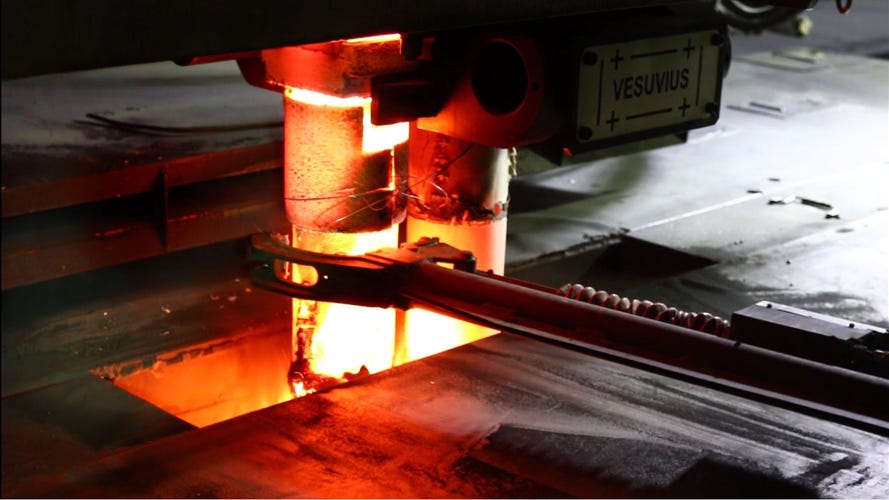
To make steel, molten metal at over 1,500°C is poured from a large bucket, called a ladle, into a mould. If it touches the air on the way, it picks up impurities and the steel is weaker. So it flows through ceramic nozzles and tubes that keep it sealed off.
Those parts wear out quickly and have to be replaced all the time. A lot of them are made by Vesuvius (LON:VSVS).
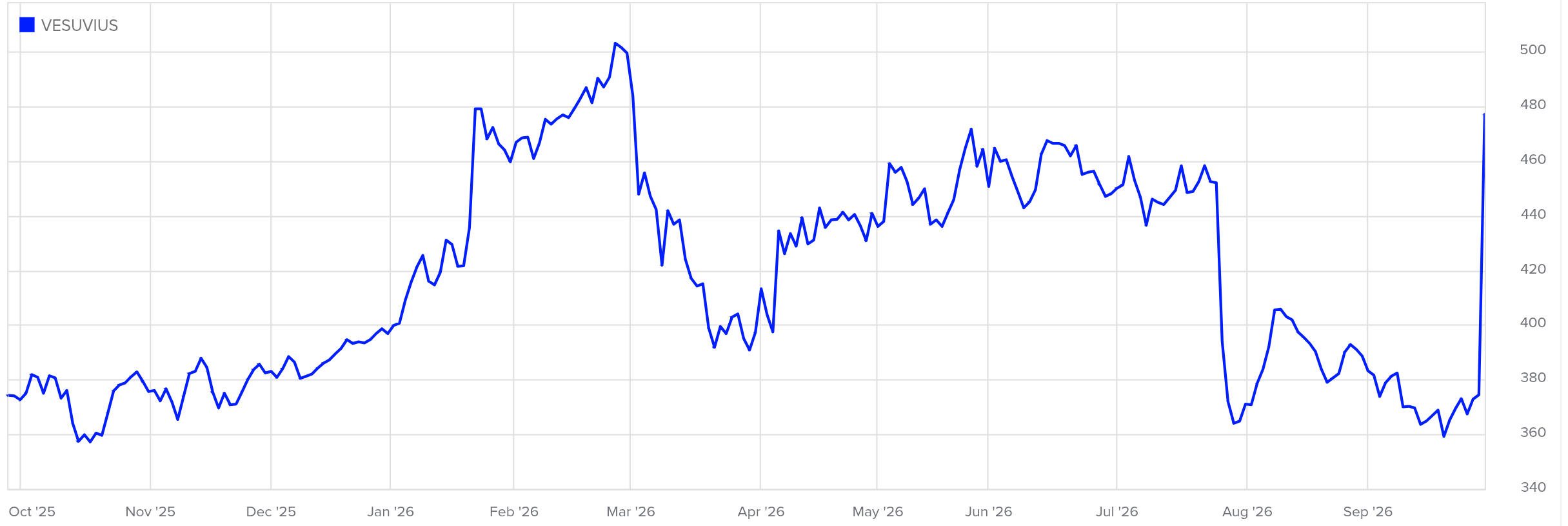
On Tuesday its shares had their best day in years. The company had just confirmed that its largest competitor wants to buy it.
What Vesuvius actually does
Most people have never heard of Vesuvius. That’s normal for a company whose customers are steelworks and factories rather than the public.
The business has two divisions.
Steel is the bigger one, and it does two jobs. The first is flow control: the nozzles, tubes and valves that guide molten steel from the ladle into the machine that shapes it, plus sensors and robots that help run the process. The second is refractories. These are heat-proof linings that stop furnaces and ladles from melting or cracking under the heat.
Foundry trades under the name Foseco. A foundry is a factory that pours molten metal into moulds to make parts, such as engine blocks or pump casings. Foseco sells them the materials they use up along the way, such as filters that catch impurities and coatings that help the finished part come out cleanly.
What makes Vesuvius interesting is that almost everything it sells gets used up. A nozzle works for a while, wears out and has to be replaced. So Vesuvius doesn’t depend on steelmakers building new plants, which happens rarely. It gets paid every time steel is poured. That makes its income steadier than most industrial companies’. The downside is simple: when the world makes less steel, Vesuvius sells less.
The company is older than most people would guess. Vesuvius started out making crucibles, heat-proof pots for melting metal, in Pittsburgh in 1916. Foseco was founded in Birmingham in 1932. A British group called Cookson bought Vesuvius in the late 1980s, then bought Foseco in 2008 for around $1 billion and merged the two. In 2012 Cookson split into two companies, and Vesuvius became a listed business in its own right.
The rival at the door
The bidder is RHI Magnesita (LON:RHIM), the Austria-based group that sits at the top of the refractories industry. Its model is vertically integrated, meaning it owns much of its own supply chain, all the way back to mining the raw materials it needs. Vesuvius is strongest in the specialised flow-control end of the market. A combination would bring the two biggest names in a narrow, heavy-industry niche under one roof.
Tuesday
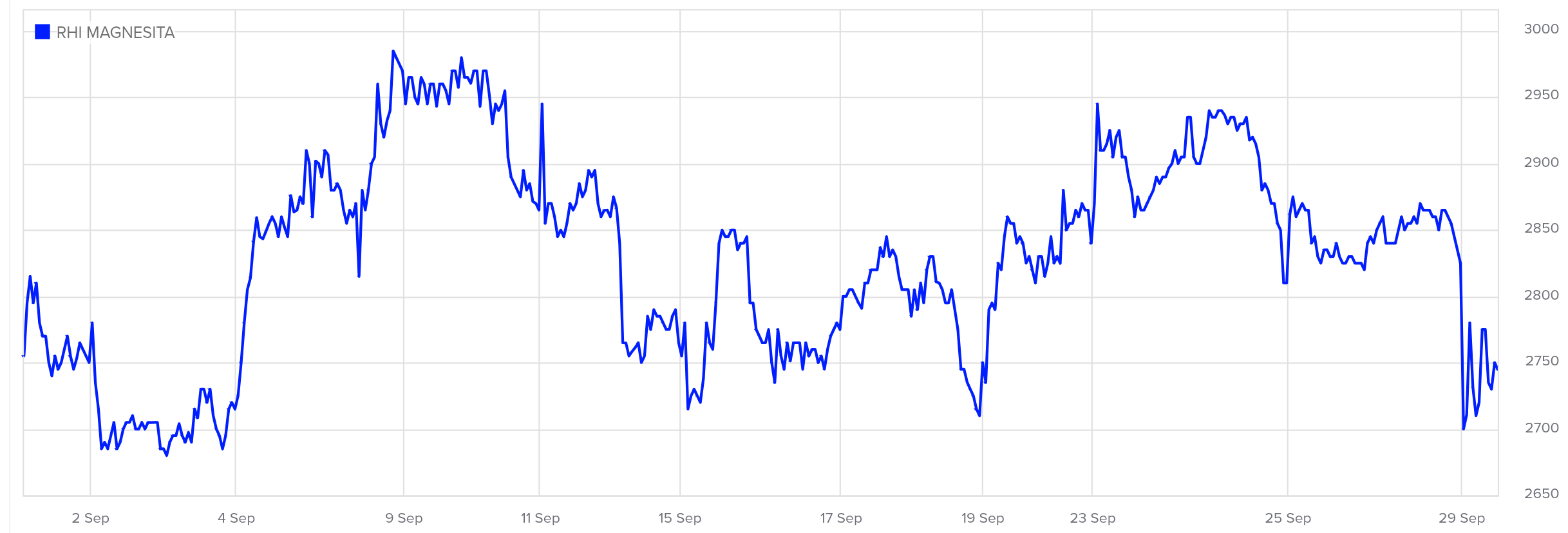
Vesuvius confirmed it was considering a proposal worth 551 pence per share. The shares rose as much as 23%, and some feeds recorded an even bigger intraday spike. On Reuters’ numbers it was the stock’s biggest intraday gain since 2008.
The proposal is a 47% premium to Monday’s close. Even so, the shares were trading around 461p during the session, so the market is clearly not treating the deal as a done thing.
The terms are 470p in cash plus 0.28 new RHI shares for every 10 Vesuvius shares. The share element is valued on RHI’s average price over the month to 27 August, when the proposal was made. Vesuvius holders would end up with about 13% of the combined group. They would also keep the 7.1p interim dividend without any deduction from the offer.
Because part of the offer is paid in RHI shares, its total value goes up and down with RHI’s share price. On 28 September, RHI valued the offer at 549p per Vesuvius share. RHI’s shares then fell 3% on Tuesday, so the offer is now worth slightly less again.
A year of saying no
This is not RHI’s first knock. The first approach came on 29 September last year: 448p, all cash. More followed through October, November and December. In March, RHI offered 550p in cash, and the board opened the books for due diligence. In June the offer was restructured to 454p in cash plus 96p in RHI shares, still totalling 550p. The board unanimously rejected it on 29 June.
So a board that threw out 550p in June is now seriously considering 551p. The penny is not what changed its mind.
Part of the answer is in the mix. The cash portion has risen by 16p, and the share portion has shrunk to compensate. Cash is the part a seller can count on.
Something has been given up in return. The earlier proposals included a “ticking fee” of 2p per share for each month the deal dragged on beyond 15 months after a firm offer, capped at three months. The latest proposal drops it. That fee existed to protect Vesuvius holders if regulators took their time, and that protection is now gone.
A bigger part of the answer is Cevian Capital. The Swedish activist fund owns 23% of Vesuvius and has given RHI an irrevocable undertaking, a binding promise to back a recommended offer on these terms. Cevian has been on the register since 2012 and has a seat on the board. When your largest shareholder has already signed, holding out gets considerably harder.
The last factor is the trading. First-half trading profit came in flat at £74 million. Production problems in the US and the ramp-up of a new plant at Vizag in India knocked roughly £8 million off the half. Free cash flow was healthier, with a £27.5 million inflow. Foundry had a strong half, with profit up by almost a third. Even so, full-year guidance was pared back to “slightly ahead” of 2025. It is harder to argue your standalone plan is worth more than the offer when that plan has just gone wobbly.
What happens next
Vesuvius went public on the approach without RHI’s agreement. Under the Takeover Code, RHI now has until 5pm on 27 October to either make a firm offer or walk away, unless the Takeover Panel grants an extension.
The gap between 461p and 551p is the market pricing in what could still go wrong. Competition regulators in several countries are the obvious hurdle when the two largest players in a concentrated industry want to merge. Vesuvius’s board flagged “execution risks”, and it is not hard to guess where some of those lie.
RHI has spent twelve months and at least seven proposals on this. Walking away at the deadline would be an odd end to that effort, but the Vesuvius board has sent it away empty-handed before.
Ollz.
This article is for information and education only and does not constitute investment advice.
Would you buy into the 17.5% spread? That is a decent return if it closes in one years time.