

Dear reader,
In July we wrote about Rathbones (LON:RAT) and the sharp fall that came with the FCA skilled person review. The findings, the two-year remediation programme and the costs bolted onto it took around 17% off the share price in a single session, and the shares have drifted lower since. At 1,650p they now sit barely above their 52-week low and roughly a third below the high they touched earlier in the year. That piece was written in the heat of it, and it ended on an open question rather than an answer.

Two months on, we can do better than react.
Since then, two things have changed. We opened a position, an initial entry trade rather than a full holding, on the view that the market had swung harder than the facts warranted. And Rathbones has published its first set of results since the sell-off, the half-year numbers out on 29 July. So we now have the one thing we did not have in July, which is evidence. A first read on whether clients are actually leaving, whether the dividend is safe, and whether this is a contained clean-up or the opening instalment of something larger.
The shape of it is easy to state and harder to trust. Earnings went up, the price stayed down. Underlying pre-tax profit rose 14% and funds under management climbed 11%, yet over the past year the shares are down about 8%, and they sit a third below their high. The market is not convinced. The question we set out to answer here is whether it is wrong.
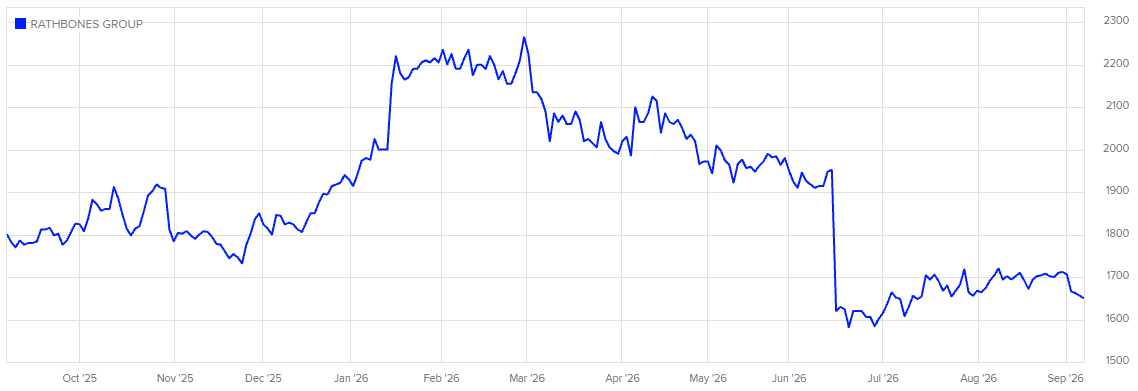
This piece is where we decide whether to leave that entry trade where it is or build on it.
For paid subscribers, below the line you will find:
The half-year results in plain English, and the flows figure the headline quietly hides. Group net flows looked broadly neutral. The high-margin core tells a very different story.
A walk through the accounts, with the one chart that shows why reported profit sits so far below the underlying number, and the case that the gap closes on its own from here.
The dividend examined properly: the cover on the earnings that flatter it and the earnings that don’t, the 35-year payment record, and whether the margin cut puts any of it at risk.
A full valuation built backwards from the share price, asking what the market is actually assuming, cross-checked against normalised earnings, a dividend discount model, and what the sector pays per pound of client assets.
How it stacks up against its peers, from St James’s Place to Quilter and Brooks Macdonald, and why the accounting makes most comparisons lie.
The bear case the accounts bury, the one open question that no number on the balance sheet answers yet, and where we land on the position we hold.
