

Dear Reader,
Two things landed from Dunelm today: a solid set of full-year numbers, and a three-year strategy that will hold profit flat while the business spends to grow. The market fixed on the second and marked the shares down close to 10%.
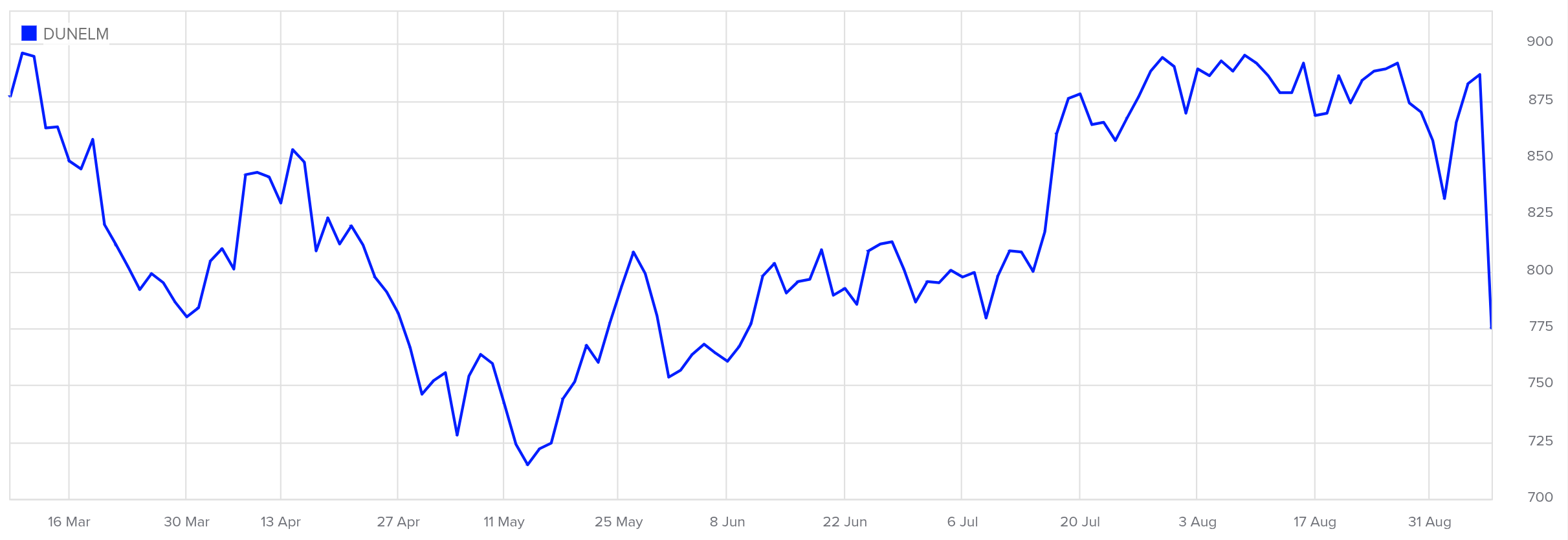
Dunelm (LON:DNLM) grew sales 3.1% to £1,825m in the 52 weeks to 27 June 2026 and held profit before tax at £211m. The year itself was steady. The reaction was all about what comes next.
The FY26 scorecard:
Sales up 3.1% to £1,825m, gross margin up ten basis points to 52.5% (a basis point is a hundredth of a percent, so the profit made on the goods themselves nudged up despite cost inflation)
The reason profit was flat sits one line down: net operating costs rose faster than the margin gain, up 30 basis points to 40.2% of sales, so the better gross margin never reached the bottom line
Market share up to 7.9% from 7.8%, still gaining ground in a market that is going nowhere
Free cash flow up to £155m from £127m, now 69% of operating profit against 57% a year ago, which is the standout number in the release
Net debt down to £94.6m from £102m, about 0.3 times cash earnings, which is barely any debt at all
Digital now 42% of sales, up two points; like-for-like sales (from stores open at least a year, so stripping out the flattery of new openings) up a soft 0.8%
The dividend shows the change of priorities. The ordinary payout rose 2.2% to 45.5p, but total declared dividends fell to 70.5p from 79.5p because the special on top was cut to 25p from 35p. Cash is being held back on purpose, and the strategy update explains why.
The plan: save £100m, spend all of it
Chief executive Clo Moriarty’s three-year plan, Winning Hearts & Homes, comes down to a single decision. Dunelm will take around £100m of unproductive cost out of the business by 2029 and put every pound of it back into growth rather than letting it drop to profit. That is a deliberate choice to build the business rather than flatter next year’s earnings, and it is the reason FY27 profit goes nowhere.
Where the money goes:
Around £125m of extra capital over three years, on top of the usual £40m a year, mostly on new and refreshed stores, with up to ten openings a year
£30m to £40m of one-off costs over two years for restructuring and new systems
Roughly 8% of head office and warehouse roles already cut since June, worth about £40m a year in savings
What management wants in return:
A return to mid-to-high single-digit sales growth, up from the ~3% it has been stuck at
An adjusted profit margin (the figure before one-off restructuring costs, rather than the statutory number that includes them) of around 11%
Return on capital employed near 30%, meaning roughly 30p of profit a year for every pound of capital tied up in the business
Where the risk sits
The weak point in the plan is easy to name. Dunelm has grown at roughly 3% for two years, and everything rests on dragging that back up to mid-to-high single digits. Cutting cost does not sell more curtains. The growth has to come from the stores, the range and the pricing, and none of that is guaranteed just because the capex is going in. If sales stay near 3% while the spending steps up, this stops looking like investment and starts looking like a margin problem dressed up as a strategy.
The hot-weather warning reads as noise rather than signal. Dunelm said the first six weeks of FY27 were significantly softer because of the heat, but that trading improved as it cooled, with footfall rising and online conversion holding up. A homewares retailer citing a heatwave for slow duvet sales in high summer is not a red flag, it is Tuesday.
Peel Hunt
Peel Hunt kept its Buy rating and 1,225p target, trimmed its FY27 profit forecast by about 3% to £211m, and lifted its sales growth assumption to around 5% from 3%. FY28 profit came down about 1.5% to £221m, and it no longer expects special dividends before 2029 while the investment runs. The sales upgrade is the notable part: the broker is buying the growth ambition even as it trims the near-term profit line, and framed the strategy as a blueprint to back after a spell in which revenue and profit had gone flat.
What it comes down to
Strip out the noise and this is a business choosing to trade near-term profit for a bigger, faster-growing store estate later. FY26 was solid and highly cash-generative. FY27 will be flat by design, with cost savings recycled straight back out and a step-up in capital spending. FY28 is when the extra £125m has to start showing up as sales rather than as a hole in the profit line.
The strategy is coherent and the balance sheet can clearly fund it. The open question is execution, and it reduces to one figure the market will not have for another year: like-for-like sales growth. Everything else in Winning Hearts & Homes is a means of moving that number, and the plan will be judged on whether it does.
Ollz.