

A note on the ticker: BioPharma Credit has two share classes over the same portfolio, BPCR priced in US dollars and BPCP in sterling. This piece follows the dollar line, so every price, yield and NAV figure below is in dollars. Sterling investors can hold BPCP or elect to take the dividends in sterling.
BioPharma Credit PLC (BPCR)
Discount to NAV: ~5% (12m avg ~7%)
Dividend yield: ~10% incl. special / ~7% base
Dividend cover: ~1.15x
Ongoing charge: ~1.21% (plus performance fee)
Gearing: 0%
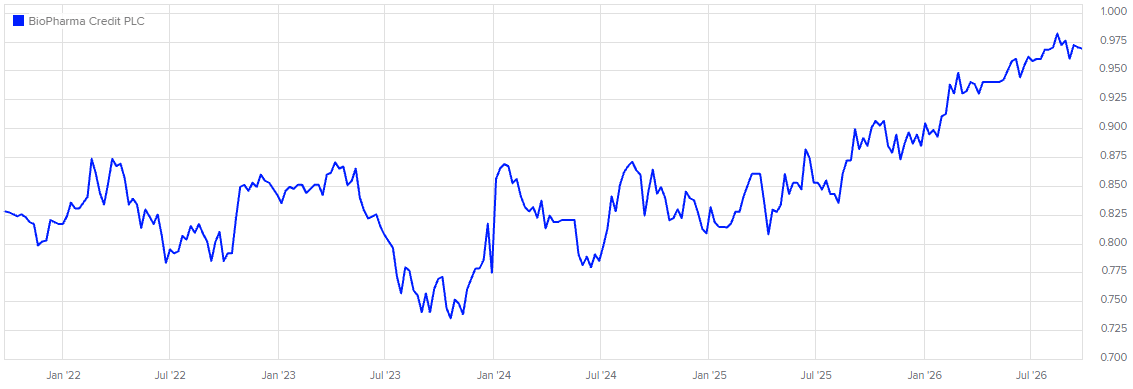
In September 2025 BioPharma Credit (LON:BPCR) climbed into the FTSE 250 without raising a penny or changing a single loan. The shares had simply drifted up enough to qualify, rising 22.3 per cent over the year while the loans beneath them gained just 14.8. So almost a third of the year’s gain came from nothing the trust actually did. It came from the market deciding to pay more for the same set of loans.
That gap has a name. A trust like this owns a pot of loans, and its shares can trade for less than those loans are worth. The difference is called the discount, and BioPharma Credit had traded at one for years. When the discount narrows, the shares rise even though the loans behind them have not, and that is most of what lifted the price last year. It is a real gain, but a fragile one, because a discount that has closed can open straight back up.
The trouble is that the thing this trust does best and its biggest weakness are the same fact. It lends so carefully that borrowers keep repaying early, and every early repayment dumps the cash back in its lap earning a fraction of what a loan would. Which leaves one question:
Are you buying a first-rate lender, or a pile of cash that happens to yield nothing yet?
The rest of this piece works through it, in order:
What the trust does
What it holds
The financials
The dividend
The manager
The price of not losing money
The verdict
1. What the trust does
It lends to drug companies that already have a medicine approved and selling, and backs the loan with the money that medicine brings in. Take Insmed (NASDAQ:INSM). Its lung drug Arikayce was already on sale across the US, Europe and Japan, but Insmed had other treatments still working through trials and needed cash to get them over the line without issuing new shares. So in 2022 the trust lent it $140m against those Arikayce sales, at about 7.75 per cent over a benchmark US lending rate. That money helped fund the next drug in the queue, which won US approval in 2025. One approved product paid for the next, and the trust collected its interest from sales that were already coming in. Four features shape the lending, and most of them tilt the odds in the trust’s favour.
Senior. The trust sits near the front of the queue to be repaid if a borrower gets into trouble.
Secured. Nearly all of it is lent against the sales of a specific drug that is already approved and on the market, with the odd unsecured note the exception.
Floating rate. The interest it charges moves with the going rate, so income rises when rates do.
Concentrated and dollar-based. A dollar fund of about $1.1bn, but only around 15 loans and roughly $740m actually out on loan, the rest in cash, yielding a little over 10 per cent.
